OP-ED: Centralization and Resistance in Somalia
The gunfire that echoed across Mogadishu in early June should dispel any lingering illusion that Somalia's political crisis is merely another dispute over election scheduling.

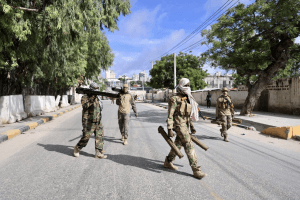
In early June 2026, gunfire in Mogadishu marked the onset of a constitutional crisis in Somalia, challenging the political consensus necessary for state-building.
What was announced
- The federal government claims constitutional reforms are essential for transitioning to a modern democratic state.
- Parliament approved a package of constitutional amendments in March 2026, seen by supporters as a milestone but criticized for lacking consultation.
- The crisis highlights the need for political consensus in implementing significant constitutional changes in Somalia's federal system.
Context
The article discusses the escalating political tensions in Somalia, emphasizing the implications of recent constitutional amendments.
“Constitutions derive their durability not simply from legal approval but from political acceptance.”
Why this matters: Understanding this crisis is crucial for Somali readers as it directly impacts the country's political stability and future governance.
Original report with a saved translation · English
English · Machine translated · Not human reviewed
Original
Original source text
The original source text is split into readable paragraphs for easier review.
The gunfire that echoed across Mogadishu in early June should dispel any lingering illusion that Somalia's political crisis is merely another dispute over election scheduling.
What unfolded in the capital was not simply a confrontation between government forces and opposition-aligned troops. It was the first violent expression of a constitutional crisis that has been building for years—one that now threatens the fragile political consensus underpinning Somalia's post-conflict state-building project.
The official narrative presented by the federal government is straightforward. Constitutional reforms were necessary to complete Somalia's unfinished transition from a provisional political order toward a modern democratic state. Electoral reforms, officials argue, are designed to replace the country's deeply flawed clan-based indirect voting system with universal suffrage. Delays and adjustments to the political timetable are therefore portrayed as unfortunate but necessary steps in a historic democratic transformation.
Few Somalis dispute the need for constitutional reform. Few defend the existing electoral model, which has repeatedly produced political crises, accusations of corruption, and endless bargaining among political elites. The aspiration for one-person-one-vote elections commands broad public support across much of the country.
Source noteWhy this story appears
This report is shown because it came from Warkasta’s monitored source network and matches the current section, recency, and coverage labels.
Why this story appears
This report is shown because it came from Warkasta’s monitored source network and matches the current section, recency, and coverage labels.
- Source count
- 1
- Sources used
- Hiiraan Online
- Language mix
- English
- Translation status
- Shown in its original language
- AI synthesis
- No AI synthesis is used for this story panel
Stay informed
Get Warka in your inbox. No noise, just what matters.