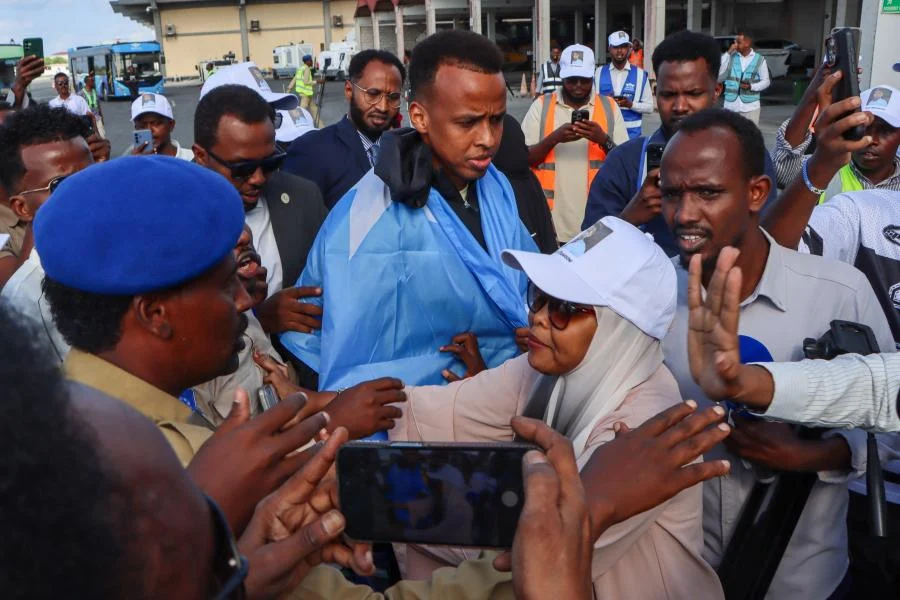
The recent case of Somali referee Omar Abdulkadir Artan being denied entry to the United States has reopened an important conversation: how is Somalia viewed internationally, and what can be done to change that image?
For many Somalis, Artan’s story was painful because it touched a wider reality. Even when Somalis succeed, they often carry the burden of Somalia’s reputation, a reputation shaped by decades of conflict, weak institutions, terrorism, political instability and negative media coverage. One person’s talent can open a door, but a country’s image can still make that door harder to enter.
Somalia cannot control every decision made by foreign governments. But Somalia can control how it builds its state, protects its citizens, presents itself to the world and earns trust over time. International respect is not demanded; it is built.
The first priority must be security. No country can improve its global standing while large parts of its territory remain unsafe or contested by armed groups. Somalia’s security forces need to become more professional, better paid, more accountable and less dependent on foreign troops. Defeating terrorism is not only a military task; it also requires justice, local governance, economic opportunity and community trust. A country that can protect its people earns more respect abroad.
Second, Somalia needs stronger institutions. International partners judge countries not only by speeches, but by systems. Can courts function fairly? Can passports be trusted? Can public money be tracked? Can elections be organised peacefully? Can contracts be enforced? These things may sound ordinary, but they are the foundation of national credibility. When institutions are weak, even innocent citizens suffer suspicion abroad.
Third, Somalia must fight corruption seriously. Corruption damages the country’s image more than any foreign headline. It tells investors to stay away, donors to hesitate and citizens to lose hope. Somalia needs transparent public spending, independent audits, stronger anti-corruption bodies and consequences for officials who abuse power. A government that protects public money protects national dignity.
Fourth, Somalia must invest in diplomacy. The country needs a more confident and professional foreign policy that speaks with one clear voice. Somali embassies should not only issue documents; they should defend Somali citizens, support Somali professionals, promote trade and challenge unfair treatment. When a Somali athlete, student, businessperson or official faces barriers abroad, the state should be visible, organised and active.
Fifth, Somalia must improve the quality of its passport and civil registry systems. A passport is more than a travel document; it is a symbol of state trust. If birth records, identity systems and passport controls are strong, other countries become more willing to ease restrictions. Improving documentation is one of the most practical ways Somalia can help ordinary citizens travel, study, work and compete internationally.
Sixth, Somalia needs to change the global story about itself. The world often hears about Somalia through crisis: famine, piracy, terrorism and political disputes. These issues are real, but they are not the whole story. Somalia also has entrepreneurs, scholars, athletes, artists, religious leaders, technology workers, farmers, traders and a powerful global diaspora. The state and media should promote these stories more effectively, not as propaganda, but as a fuller picture of the country.
Seventh, Somalia must use its diaspora as a national asset. Somalis abroad are already doctors, engineers, business owners, academics, drivers, teachers, athletes and community leaders. They understand both Somalia and the wider world. A serious government would build stronger links with them, encourage investment, protect their rights and use their skills to strengthen Somalia’s reputation internationally.
Eighth, Somalia must prioritise economic credibility. Countries are respected when they produce, trade and create opportunity. Somalia has major potential in livestock, fisheries, agriculture, ports, renewable energy, telecommunications and digital services. But potential alone is not enough. Investors need stability, clear laws, fair taxation and protection from political interference. A stronger economy gives Somalia a stronger voice.
Ninth, Somali leaders must reduce internal political conflict. Constant disputes between federal and regional leaders make the country look unstable and divided. Political disagreement is normal, but endless crisis weakens the state. Somalia needs a culture of negotiation, constitutional clarity and peaceful transfers of power. A country that cannot organise its internal politics will struggle to gain confidence abroad.
Finally, Somalia must protect excellence wherever it appears. When a Somali reaches the global stage, whether in sport, science, business, education or culture, the country should treat that person as a national ambassador. Omar Artan’s rise as a referee shows what Somali talent can achieve. Somalia should build systems that help such talent grow, travel and represent the nation with pride.
Improving Somalia’s international standing will not happen overnight. It requires security, institution-building, diplomacy, economic reform and national unity. But the goal is possible. Somalia’s image was damaged over many years; it can also be repaired over many years.
The lesson from Omar Artan’s case is clear: individual excellence is powerful, but national credibility matters too. Somalia must build a country where talented Somalis are not held back by the weakness of the state behind them.
A better international reputation begins at home. When Somalia becomes safer, fairer, more organised and more confident, the world will have no choice but to see it differently.