Turjumaad ayaa la diyaarinayaa
Turjumaadda akhriska ee sheekadan wali waa la diyaarinayaa. Qoraalka asalka ah waxaa laga heli karaa hoos.

Warbixin English asal ah
Isha asalka ahAsalka
Qoraalka asalka ah
Qoraalka hoose waa qoraalka asalka ah ee isha. Waxaa loo kala jaray tuducyo si akhrisku u fududaado.
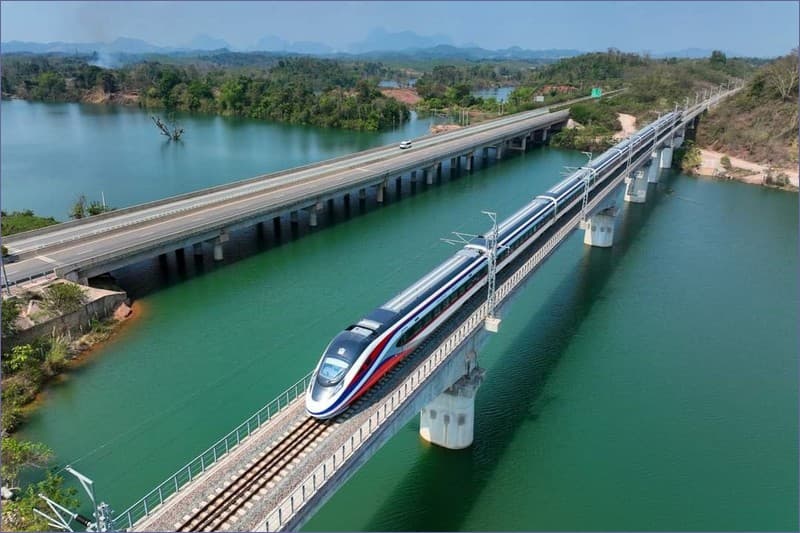
MOGADISHU, SONNA — On May 25, 2026, a refrigerated freight train loaded with fresh durians and mangosteens completed its journey from the Lao border town of Boten and arrived at the Chinese rail station of Mohan, clearing a major economic threshold. This arrival officially pushed the total volume of cross-border fruits transported along the China-Laos Railway past 100,000 tonnes since the start of the year, reaching a metric of 107,900 tonnes. This represents an aggressive 30 percent year-on-year surge, demonstrating the rapid consolidation of agricultural supply chains across the regional corridor.
Inaugurated in December 2021, the infrastructure asset linking Kunming in Yunnan Province with Vientiane, the capital of Laos, has re-engineered the logistics footprint of Southeast Asia. Historically, land-locked geography acted as a structural bottleneck for the Lao economy, inflating transit costs and isolating local producers from global consumer bases. The railway serves as a physical mechanism aligning China’s Belt and Road Initiative with the national strategy of Laos to transition from a land-locked barrier into a land-linked regional hub. The route has created a stable, high-velocity logistics corridor that has transformed how land-tied economies interact with global markets.
The operational impact of the corridor is highly visible in its raw transit metrics. Prior to the rail link, cross-border freight movements required three to seven days of complex road transit; today, that operational window has been compressed to just one or two days. A technical report published by the World Bank reveals that the railway has effectively slashed shipping costs between China and Laos by 40 to 50 percent, while simultaneously lowering domestic logistics expenses within Laos by 20 to 40 percent.
This reduction in overhead has triggered an unprecedented expansion in trade diversity and commercial enterprise engagement. As of April 7, 2026, the volume of unique goods categories flowing through the corridor expanded from 500 at launch to more than 3,800. The corridor currently services more than 6,000 Chinese enterprises and extends its logistical reach across 19 countries and regions, including Thailand.
Isha warkaSababta sheekadan loo muujiyey
Warbixintan waa la muujiyey sababtoo ah waxay ka timid shabakadda ilaha Warka la socdo, waxayna la jaanqaadaysaa qaybta, waqtiga, iyo calaamadaha daboolidda.
Sababta sheekadan loo muujiyey
Warbixintan waa la muujiyey sababtoo ah waxay ka timid shabakadda ilaha Warka la socdo, waxayna la jaanqaadaysaa qaybta, waqtiga, iyo calaamadaha daboolidda.
- Tirada ilaha
- 1
- Ilaha la adeegsaday
- SONNA English
- Isku dhafka luqadaha
- English
- Xaaladda turjumaadda
- Qoraalka asalka ah ayaa muuqda sababtoo ah turjumaad kaydsan weli lama hayo
- Soo koobid AI
- AI looma isticmaalin qaybta kalsoonida ee sheekadan
La socodsii
Warka ku hel sanduuqaaga. Macluumaad muhiim ah oo kaliya.