Catastrophe Is Emerging in the World’s Most Vulnerable Places
The humanitarian relief system, decimated by cuts, faces a grave challenge as the Middle East war causes soaring costs for food, fuel and fertilizer.

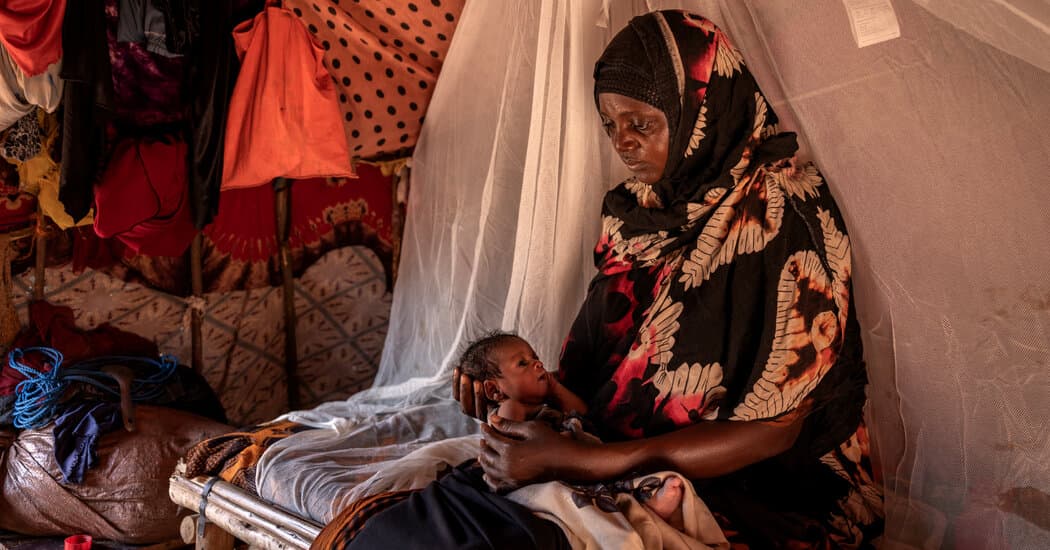
Abdullahi Abdi Abdirahman and his family, along with over 100,000 others, fled to Dollow, Somalia, seeking aid that has largely disappeared due to funding cuts and international conflicts.
What was announced
- The family traveled 140 miles to Dollow after drought killed their livestock and savings.
- Aid organizations have abandoned Dollow after the dismantling of U.S.A.I.D. and reduced funding from global governments.
- The ongoing war in the Middle East has caused food prices in Somalia to double, worsening the hunger crisis.
Context
The article highlights the impact of international funding cuts and conflicts on humanitarian aid in Somalia, particularly in the wake of a drought and rising global tensions.
““Milk and meat are just a dream for us,” said Mr. Abdirahman, 47.”
Why this matters: This situation illustrates the dire humanitarian crisis in Somalia, affecting many families and highlighting the need for increased international support.
Original report with a saved translation · English
English · Machine translated · Not human reviewed
Original
Original source text
The original source text is split into readable paragraphs for easier review.
For nine days, they trudged across the parched soil of southern Somalia, taking turns carrying their 3-year-old daughter on their shoulders. Abdullahi Abdi Abdirahman, his wife and their seven children sought escape from a landscape drained of life.
Another drought had killed their goats and sheep, turning their life savings to dust. So they pressed on for 140 miles toward Dollow, a dusty outpost on the Ethiopian border. They were drawn by the same things that had already attracted more than 100,000 other people: International relief organizations were clustered there, offering food, water and health care.
Yet when they arrived in late January at a camp on the fringes of town, they were horrified to learn that aid groups had abandoned the area. President Trump had dismantled the U.S. Agency for International Development, or U.S.A.I.D., eliminating Somalia’s primary source of assistance. From London to Berlin, governments had reduced funding for humanitarian aid. Relief organizations had been forced to choose where to focus their remaining money.
Dollow had not made the cut. Inside the camps, thousands of tents remained, but aid was disappearing. Families were losing cash grants for food. Health clinics were bereft of medicines and staff.
Source noteWhy this story appears
This report is shown because it came from Warkasta’s monitored source network and matches the current section, recency, and coverage labels.
Why this story appears
This report is shown because it came from Warkasta’s monitored source network and matches the current section, recency, and coverage labels.
- Source count
- 1
- Sources used
- New York Times Somalia
- Language mix
- English
- Translation status
- Shown in its original language
- AI synthesis
- No AI synthesis is used for this story panel
Stay informed
Get Warka in your inbox. No noise, just what matters.